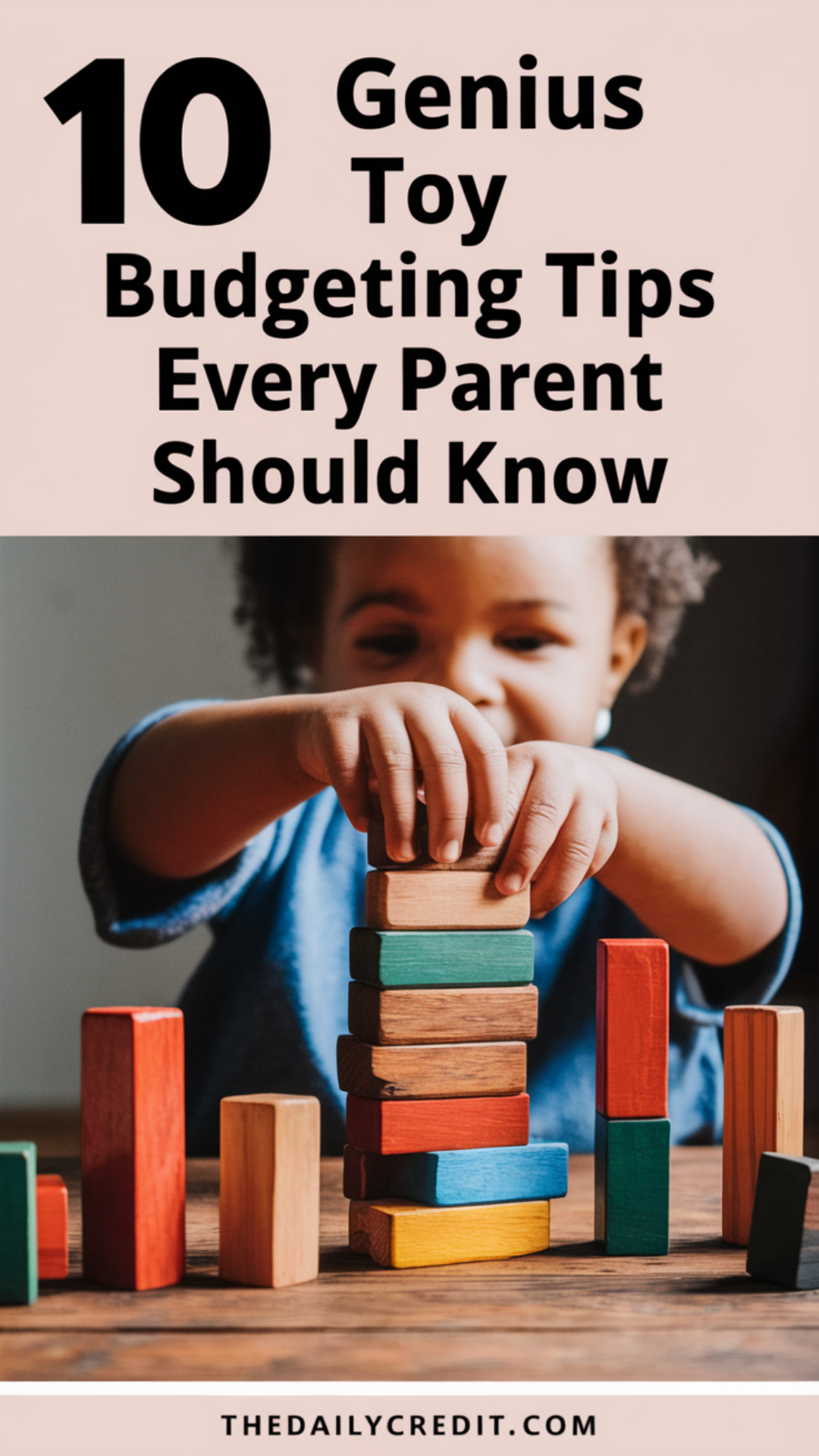
I’ve built businesses by cutting small, recurring leaks that most people ignore. Toy spending is one of those silent budget drains. The average family spends $1,000–$1,500 per year per child on toys, games, and impulse buys. Saving $600 a year doesn’t require saying no to fun — it requires structure.
Here’s how to do it like an operator.
Set a Hard Annual Toy Cap
Stop thinking per trip. Think per year.
Set a firm budget:
$600 per child annually or
$50 per month
If you’re currently spending $100 per month, cutting it to $50 instantly saves $600 per year.
Constraint creates clarity.
Break the Budget Into Quarters
Instead of random purchases, allocate:
$150 per quarter
This prevents heavy birthday and holiday spikes.
Eliminating just one $150 impulse shopping trip per quarter equals your $600 annual savings target.
Structure beats emotion.
Use the 30-Day Rule
Impulse buying drives toy overspending.
Before purchasing any non-essential toy, wait 30 days.
Consumer studies show many impulse desires fade within weeks.
Avoiding just one $50 impulse purchase per month equals $600 per year.
Delay increases discipline.
Buy Off-Season and Clearance
Retail cycles create opportunity.
Post-holiday sales often hit 50–70% discounts.
Buying a $100 toy at 50% off saves $50 instantly.
Do that once per month and you’ve reached your $600 annual savings goal.
Timing equals leverage.
Rotate Instead of Accumulate
Most kids actively use less than 40% of their toys at once.
Store half. Rotate every 4–6 weeks.
This reduces the perceived need for new purchases.
Cutting just $50 per month in “boredom buys” equals $600 annually.
Utilization beats accumulation.
Use Resale to Offset Spending
Toys depreciate but still hold value.
Selling unused items for $50 per month equals $600 annually.
Recycle capital instead of constantly deploying new cash.
Stack Small Efficiencies
Combine:
$25 from reduced impulse buys
$15 from clearance savings
$10 from resale offsets
That’s $50 per month — $600 per year.
Small adjustments compound.
Final Word from the Street
Saving $600 a year with smart toy budgeting isn’t about reducing joy.
It’s about:
Setting firm spending caps
Delaying impulse purchases
Leveraging retail cycles
Rotating existing inventory
Recycling value through resale
That’s $600 back into your household balance sheet.
Small discipline creates long-term strength.
That’s how smart operators manage even the smallest expense categories.
I'm Richard Polk Vaughan, head writer at The Daily Credit, where I blend Wall Street expertise with freelance hustle. Crafting investment strategies and advising clients is my game, but I also dive into affiliate marketing and social media strategy. Outside work, you’ll find me on the tennis court or golf course, and I never say no to a good pizza. Balancing work, play, and passion keeps me sharp and ahead of the curve.